Building Production-Ready React Native Apps with Firebase, Expo & Clean Architecture
A practical guide to planning scalable React Native apps with clean architecture, Firebase integrations, app store readiness, and AI-assisted development workflows.
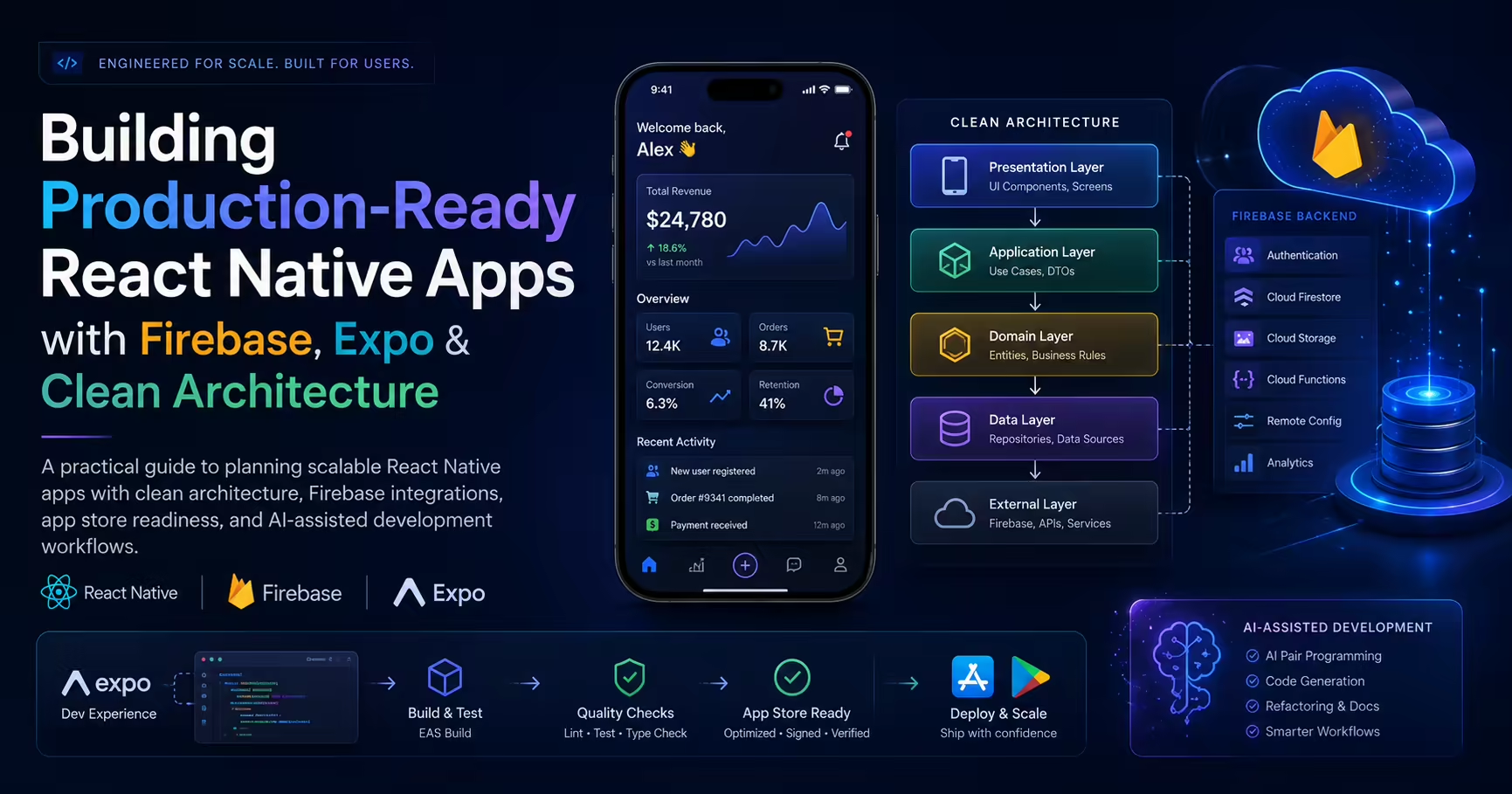
React Native can move a product from idea to launch quickly, but production apps need more than screens and navigation. A serious mobile product needs reliable authentication, clean state management, reusable UI, analytics, testing, release planning, and a path for future features.
If you are planning a production app, my React Native mobile app development service covers architecture, Firebase integrations, Expo workflows, testing, and iOS or Android release support.
Start with the product workflow
Before writing code, define the main user journeys. For a marketplace, that might mean onboarding, profile setup, listing creation, search, chat, checkout, and notifications. For an AI-powered app, it might mean prompt input, result generation, history, subscriptions, and feedback loops.
Clear workflows help the engineering architecture stay simple. They also make it easier to decide which screens need offline support, which actions need server validation, and where errors must be handled carefully.
Choose architecture early
A scalable React Native app should separate UI, data access, business rules, and third-party integrations. This keeps Firebase, REST APIs, payment gateways, maps, push notifications, and analytics from spreading across every screen.
Good architecture also makes AI-assisted development more useful. Tools like ChatGPT, Claude, Cursor, and Codex work better when the project has clear modules, naming patterns, and predictable boundaries.
For products that need AI features, recommendation engines, automation, or AI chat flows, see my AI app development service.
Plan the release path
Production readiness includes App Store and Play Store requirements. Icons, screenshots, privacy policy, permissions, crash handling, versioning, and environment configuration should be planned before the final week of development.
For founders and startups, this is where a strong technical partner helps. The goal is not just to build an app, but to ship a product that can be tested, improved, and maintained after launch.
Need help building a production-ready React Native app, AI-powered product, or full-stack MVP? Contact Abdul Rafay to discuss your project.